





The Definition and Application of Collagen, Gelatin, and Hydrolyzed Collagen Abstract
collagen,gelatin, and hydrolyzed collagen are closely related protein derivatives with distinct structural characteristics and functional properties, widely used in food, pharmaceutical, cosmetic, and nutraceutical industries. This article systematically compares their molecular structures, production processes, and key functionalities, analyzes their applications in health promotion, Food Manufacturing, and skincare, and provides insights for rational selection based on specific use cases. By clarifying common misconceptions and highlighting scientific evidence, this work serves as a comprehensive guide for researchers, industry professionals, and consumers seeking to understand these versatile proteins.
- Introduction
Collagen is the most abundant fibrous protein in the extracellular matrix of animals, accounting for 25–30% of total body protein in mammals. It plays a critical role in maintaining the structural integrity of skin, bones, joints, tendons, and connective tissues (Ricard-Blum, 2011). gelatin andhydrolyzed collagen are derived from collagen through controlled processing, retaining key amino acid profiles (e.g., glycine, proline, hydroxyproline) while exhibiting modified physical and chemical properties. Despite their shared origin, these three substances differ significantly in molecular weight, solubility, and functionality, leading to diverse applications across industries. With growing consumer interest in natural ingredients, anti-aging products, and functional foods, understanding the differences between collagen, gelatin, and hydrolyzed collagen has become increasingly important for product development and informed consumption.
- Structural Characteristics and Production Processes
2.1 Collagen
- Molecular Structure: Native collagen consists of a triple-helix structure formed by three polypeptide chains (α-chains) intertwined through hydrogen bonds. Each chain contains repeating Gly-X-Y sequences (X is often proline, Y is hydroxyproline), which stabilize the helix and contribute to collagen’s tensile strength (Brodsky & Shah, 2016). The molecular weight of native collagen ranges from 300 kDa to 400 kDa, making it insoluble in water and most organic solvents.
- Sources and Extraction: Collagen is primarily extracted from animal by-products such as bovine hides, porcine skin, fish scales, and chicken feet. The extraction process involves degreasing, demineralization, and acid/alkaline treatment to remove non-collagenous proteins, followed by precipitation and purification to obtain collagen in powder or gel form (Li et al., 2020).
2.2 Gelatin
- Molecular Structure: Gelatin is produced by partial hydrolysis of collagen, which breaks the triple-helix structure into random-coiled polypeptide chains. Its molecular weight ranges from 10 kDa to 100 kDa, with a broader distribution compared to native collagen. Gelatin retains the Gly-X-Y sequence but lacks the ordered triple helix, enabling it to form a thermoreversible gel network when cooled (Zhang et al., 2018).
- Production Process: The manufacturing of gelatin involves two main methods: acid hydrolysis (type A gelatin) and alkaline hydrolysis (type B gelatin). Acid hydrolysis is used for collagen from porcine skin, while alkaline hydrolysis is suitable for bovine hides and bones. After hydrolysis, the solution is filtered, concentrated, and spray-dried to produce gelatin powder. The degree of hydrolysis is controlled to balance gelling strength, viscosity, and solubility (Regenstein & Regenstein, 2012).

- Molecular Structure: Hydrolyzed collagen (also called collagen peptides or collagen hydrolysate) undergoes further enzymatic or acid hydrolysis of gelatin, resulting in smaller peptide chains with a molecular weight of 1 kDa to 10 kDa. These short peptides are soluble in water at all temperatures and do not form gels, as their molecular size is too small to form a stable network (Pei et al., 2019).
- Production Process: Hydrolyzed collagen is typically produced by treating gelatin with proteolytic enzymes (e.g., trypsin, pepsin) or strong acids, followed by ultrafiltration to separate peptides by molecular weight. The process ensures high bioavailability, as the small peptides can be rapidly absorbed in the gastrointestinal tract without further digestion (Jongjareonrak et al., 2014).
- Key Functional Differences
Property
Collagen
Gelatin
Hydrolyzed Collagen
Solubility
Insoluble in water (room temp)
Soluble in hot water; forms gel when cooled
Soluble in water (hot/cold)
Molecular Weight
300–400 kDa
10–100 kDa
1–10 kDa
Structure
Triple helix
Random coil
Short peptides (no helix)
Gelling Property
No
Yes (thermoreversible)
No
Bioavailability
Low (requires digestion)
Moderate
High (rapid absorption)
Thermal Stability
Denatures at 60–70°C
Denatures at 30–40°C (melts)
Stable at most temperatures
- Applications
4.1 Health and Nutraceuticals
- Collagen: Due to its low solubility and bioavailability, native collagen is rarely used as a dietary supplement. Instead, it is used in medical devices such as wound dressings, tissue engineering scaffolds, and drug delivery systems, leveraging its biocompatibility and structural support (Lee et al., 2021).
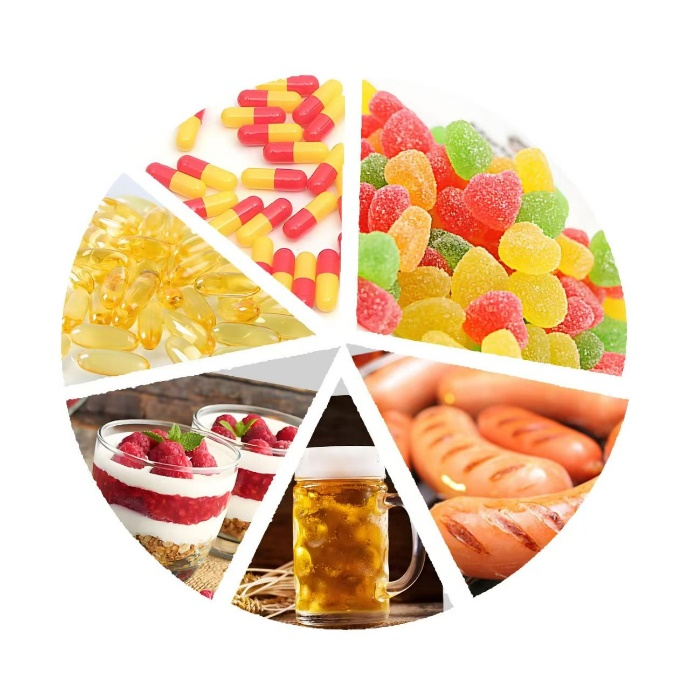
- Gelatin: As a nutritional supplement, gelatin provides amino acids that support gut health, sleep quality (via glycine), and bone metabolism. It is also used in pharmaceutical formulations (e.g., capsules, tablets) as a binder and disintegrant (Khan et al., 2016).
- Hydrolyzed Collagen: The most widely used form in supplements, hydrolyzed collagen is proven to support joint health by reducing pain and improving mobility (Veronese et al., 2019). It also enhances skin hydration, elasticity, and collagen synthesis, making it a key ingredient in anti-aging supplements. Additionally, it is used in sports nutrition to promote muscle recovery and reduce exercise-induced inflammation (Zdzieblik et al., 2015).

4.2 Food Industry
- Collagen: Used in processed meats (e.g., sausages, hot dogs) to improve texture and water retention. It is also added to seafood products to enhance firmness (Liu et al., 2018).
- Gelatin: A versatile food additive, gelatin is used to produce jellies, marshmallows, gummy candies, and yogurt, providing gelling, thickening, and stabilizing properties. It is also used in bakery products to improve dough elasticity and shelf life (Regenstein & Regenstein, 2012).
- Hydrolyzed Collagen: Added to functional foods such as protein bars, smoothies, and fortified beverages for its high protein content and solubility. It does not alter the taste or texture of foods, making it ideal for fortification (Pei et al., 2019).
4.3 Cosmetics and Skincare
- Collagen: Used in creams, serums, and masks to improve skin firmness and reduce wrinkles. However, its large molecular size limits penetration into the deeper layers of the skin, so it primarily acts as a surface moisturizer (Schmidt & Schumann, 2017).
- Gelatin: Added to facial masks and body wraps for its hydrating and film-forming properties. It helps lock in moisture and improve skin texture temporarily (Zhang et al., 2018).
- Hydrolyzed Collagen: A popular ingredient in anti-aging skincare products, as its small peptide chains can penetrate the stratum corneum and stimulate collagen synthesis in skin fibroblasts. It reduces wrinkles, improves skin elasticity, and enhances barrier function (Jongjareonrak et al., 2014).
- Safety and Considerations
All three proteins are generally recognized as safe (GRAS) by the FDA and EFSA. However, consumers with allergies to animal products (e.g., beef, pork, fish) should avoid them. For halal and kosher consumers, gelatin derived from permissible sources (e.g., fish gelatin for halal) is available. Additionally, the quality of collagen products depends on the source, extraction method, and molecular weight distribution—consumers should choose products from reputable manufacturers with third-party testing certifications.
- Conclusion
Collagen, gelatin, and hydrolyzed collagen are distinct derivatives with unique structures and functionalities. Native collagen excels in structural applications, gelatin is valued for its gelling properties in food and pharmaceuticals, and hydrolyzed collagen stands out for its high bioavailability and health benefits in supplements and skincare. Understanding their differences allows for targeted use in various industries and informed consumer choices. Future research may focus on developing plant-based alternatives, improving extraction efficiency, and exploring new applications in personalized nutrition and regenerative medicine.